
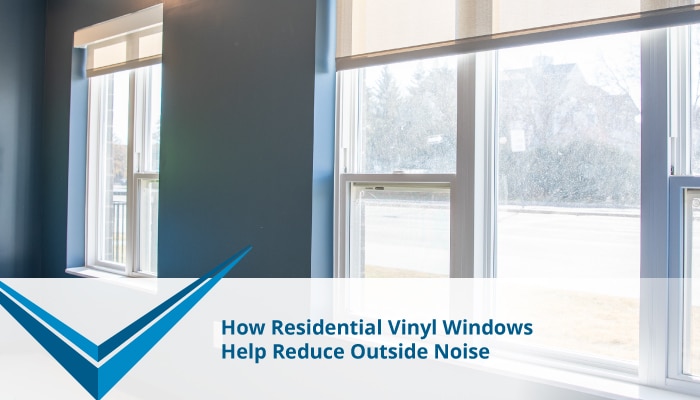
Traffic, lawn equipment, and other outdoor sounds can make it harder to enjoy a peaceful home. Homeowners can create a quieter, more private living environment with residential vinyl windows designed to limit sound transmission.
Effective noise reduction depends on how the window frame, seals, and glass work together, along with proper installation. Vector Windows is proud to help homeowners and contractors make informed decisions about indoor comfort. Keep reading to learn about which components and glass options support a quiet home.
Why Is Outside Noise Difficult to Control With the Wrong Windows?
A home should offer a comfortable retreat from the activity outside. However, even with well-insulated walls, unwanted sounds can enter living spaces because glass blocks less sound than solid wall construction. Older, single-pane windows may offer less protection against outside noise, especially if they have worn seals or poorly fitting components that leave gaps for sound to travel through.
Reducing unwanted sound requires attention to the entire window assembly. Residential vinyl windows with well-fitting frames, effective seals, and an appropriate glass package work together to limit sound transmission. Proper installation helps maintain these benefits by minimizing gaps that could compromise indoor comfort.
How Do Residential Vinyl Windows Help Reduce Outside Noise?
Well-constructed residential vinyl windows limit the pathways that allow outdoor sound to enter. They use seals around the sash and frame to create a tighter barrier between indoor and outdoor environments. This helps homeowners maintain a quieter home without sacrificing natural light or outdoor views. Proper installation is equally important as window construction. An experienced professional will know how to secure the window in the wall opening and seal the perimeter gaps to prevent sound from bypassing the assembly.
How Do Glass Packages Affect Window Noise Reduction?
Residential vinyl windows with insulated glass have multiple panes separated by a sealed space, creating additional barriers between indoor and outdoor environments. Compared to single-pane glass, these configurations can provide better sound insulation, although performance varies depending on the glass thickness, spacing, and overall design.
The ideal glass package for vinyl windows depends on the home's surroundings. A property near a busy road may have different sound control needs than one in a quiet residential neighborhood. By considering the sources and intensity of outdoor noise, homeowners and contractors can match a glass package to the desired level of indoor comfort.
Create a Quieter Home With Vector Windows
Quality construction, effective seals, insulated glass, and proper installation all help reduce exterior noise and create more comfortable living spaces. Choosing the right configuration lets homeowners enjoy peace of mind that also meets energy efficiency, appearance, and other performance needs.
Vector Windows has residential vinyl windows and glass options that balance noise reduction with energy efficiency, appearance, and other performance priorities. Find a local Vector Windows dealer to explore available options!
FAQs
Do residential vinyl windows help reduce outside noise?
Yes. Well-constructed residential vinyl windows can help reduce outside noise through tight-fitting frames, effective seals, and insulated glass. The level of noise reduction depends on the complete window assembly and proper installation.
Does insulated glass help reduce traffic noise?
Insulated glass can help reduce traffic noise by using multiple panes separated by a sealed space. However, performance varies depending on glass thickness, pane spacing, and the frequency of the sound. Homeowners near busy roads may benefit from exploring glass configurations with enhanced sound insulation.
What window features should homeowners consider for reducing outside noise?
Homeowners should prioritize quality frame construction, effective weatherstripping, insulated glass, and proper installation. Evaluating these features together helps identify windows that limit sound transmission while supporting energy efficiency and overall home comfort.


